

Revisiting Old Friends
On a camping trip, at our usual site

Hello everyone,
This is a free email newsletter about travel and places, where you’ll find personal travel stories and in-depth narratives at the intersections of nature and wildlife, history and mythology, art and culture, told by a published travel writer. To have it land in your inbox, sign up here:
In this issue, I am inviting you to come along with me on a camping trip in the Four Corners…
We are lucky to be almost alone at the campground again. Our favorite site is open, and we pull in. As I step out of the car, the pinyons and junipers greet me like old friends.
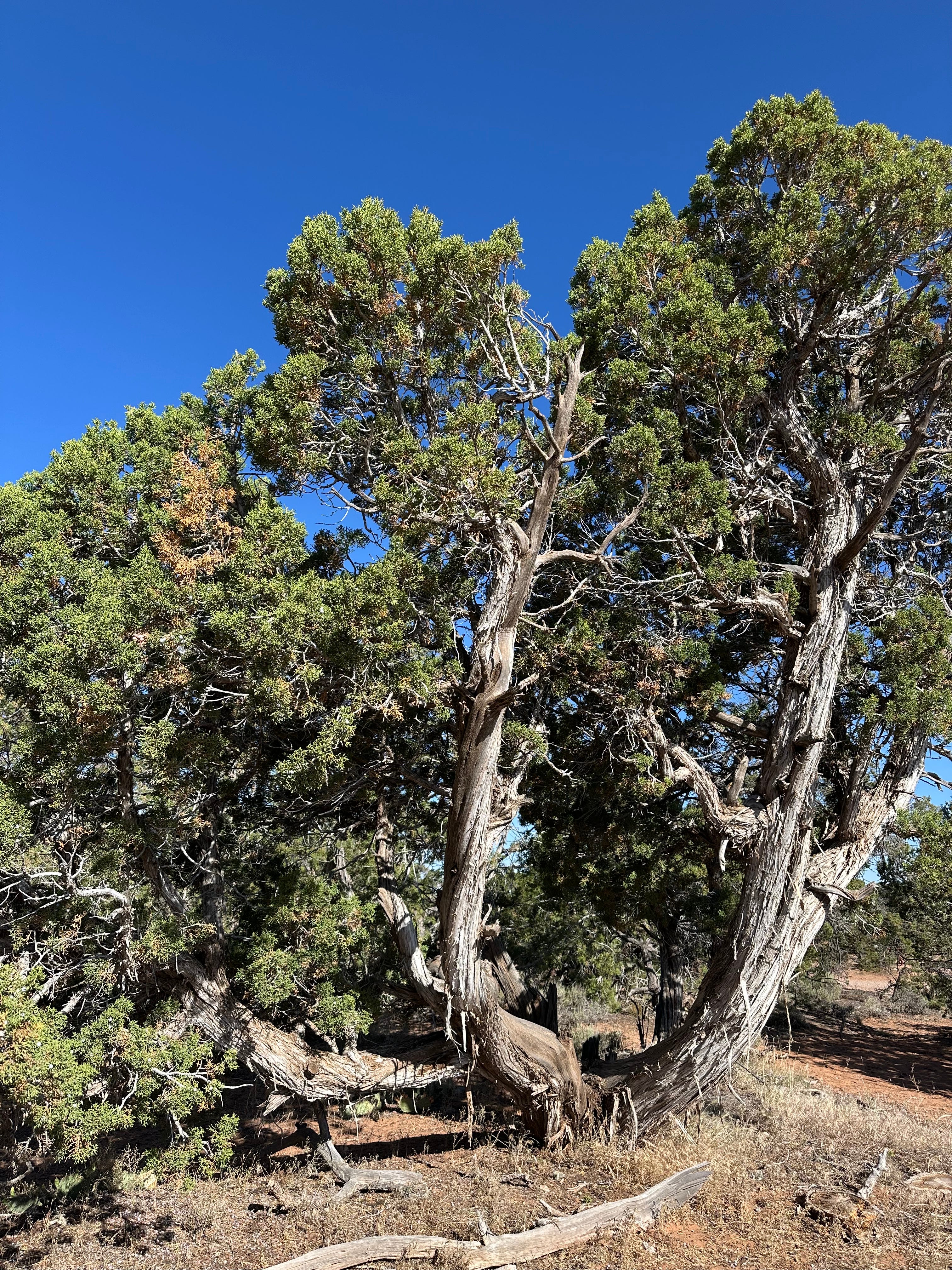
I know these trees; I recognize each of them, standing guard around the campsite where we usually set up our tent, offering some shade, but more so a shield from the wind. They stand above the gentle slope that leads to the edge of the canyon.
We first met them in 1993. We had just moved to Phoenix, young and excited to explore the Southwest. I stood in the same spot, looking at the same trees and the same canyon, setting up another tent, one we had used until it fell apart over the years.
It was only the first time, but certainly not the last, that we’ve seen them. We’ve been returning to this spot often over the years, sometimes just stopping by, often setting up a tent, yet in all this time, the trees haven’t changed at all. At least not visibly. I recognize their shape, their branches, their twisted trunks. They barely seem to have grown at all.
Living in the high desert, the pinyon pines and junipers grow extremely slowly. Some of them are over six hundred years old, yet they are short, stunted. During one human lifetime, they change little; so when I revisit them, I recognize them, and I can greet them like old friends.
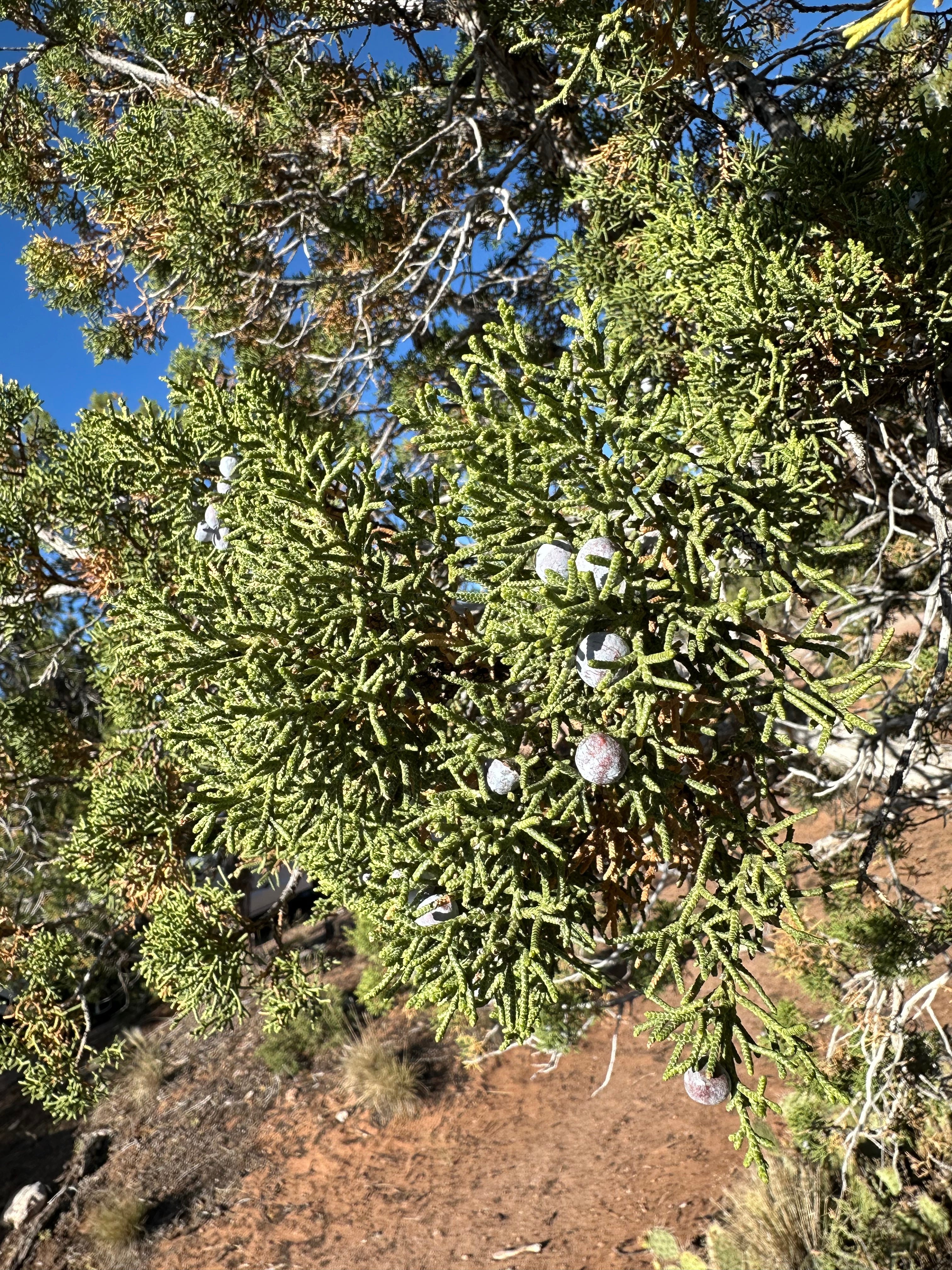
I walk over to a juniper standing guard above the canyon. Full of berries, they are scattered around her, on the ground. They are edible, though I never tried them. Not yet, anyway. Tiny and light blue, they stand out against the red sandy ground and against the juniper’s leaves. I’m guessing this is to invite animals like jackrabbits and coyotes, and many varieties of birds to eat them, and later disperse the seeds. If you open them, you realize they are not real berries, but tiny pinecones covered with a drought-resistant waxy coating.
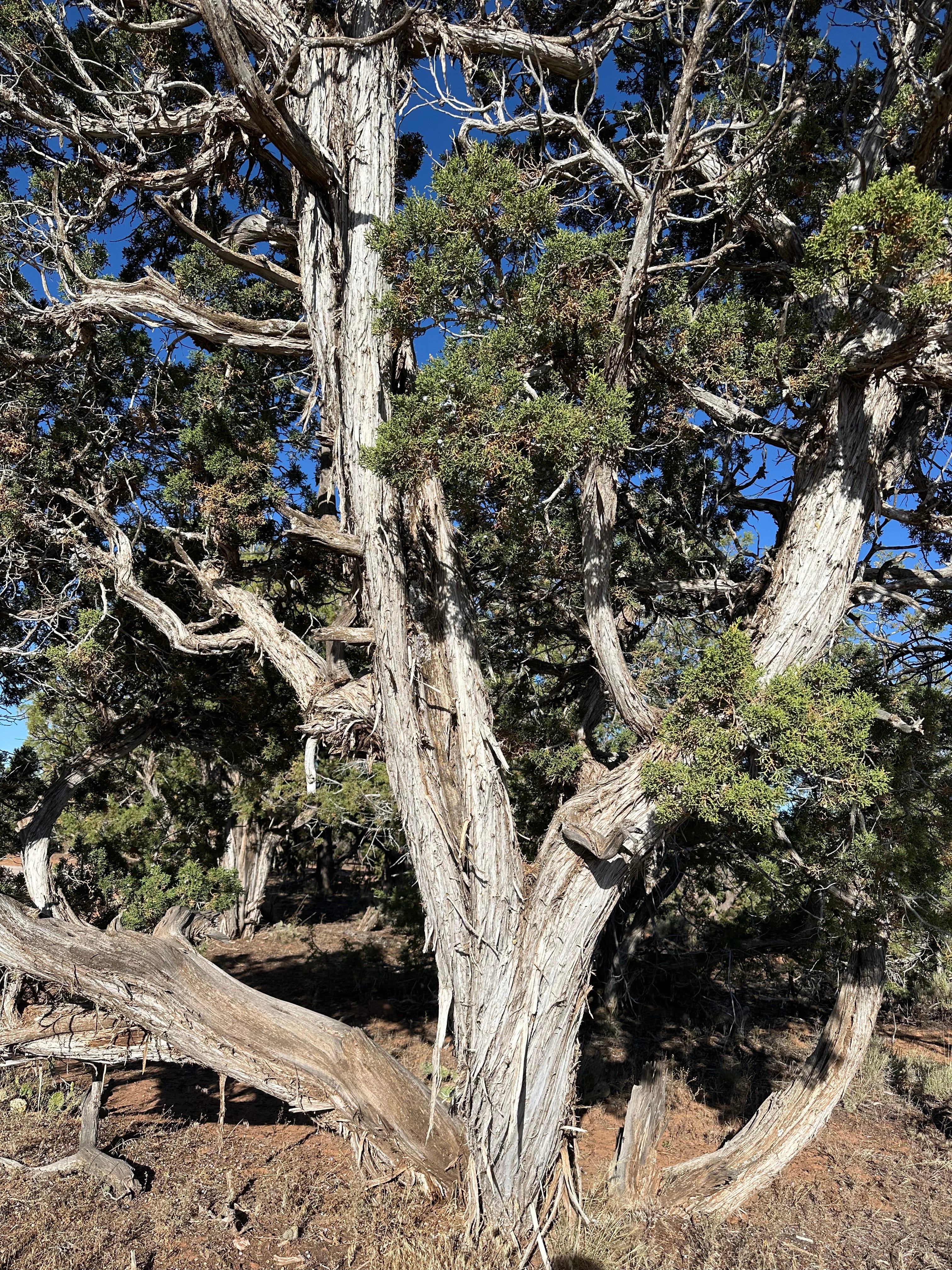
It’s easy to recognize the individual trees, since no two junipers in the campground look alike. Some are bushy, with beautiful crowns, others have multiple, twisted trunks, and others yet seem dead at first sight, and only at a closer look, I notice some of their branches alive and healthy.


This is one of their strategy to survive in this harsh environment, with little water. The juniper self-prunes, stopping the nutrient supply to some of its branches, to ensure the survival of the whole tree. Her other secret is her ability to grow a massive underground root system, often two-thirds of the whole tree, able to penetrate rocks up to 25 feet deep in search of water, and its lateral roots grow as far as 100 feet from the tree.
I don’t know how to tell the exact age of these junipers, but I know they are hundreds of years old. They usually live between 300 and 700 years, some even over a millennium. However, despite their age, they rarely grow over 30 feet in height.
Which is why I feel closer to them. They are short, they are resilient, they live where few other trees can survive. They add beauty and color to the landscape, providing a stark contrast to the orange-red rocks, happy to live in a place where few plants can.
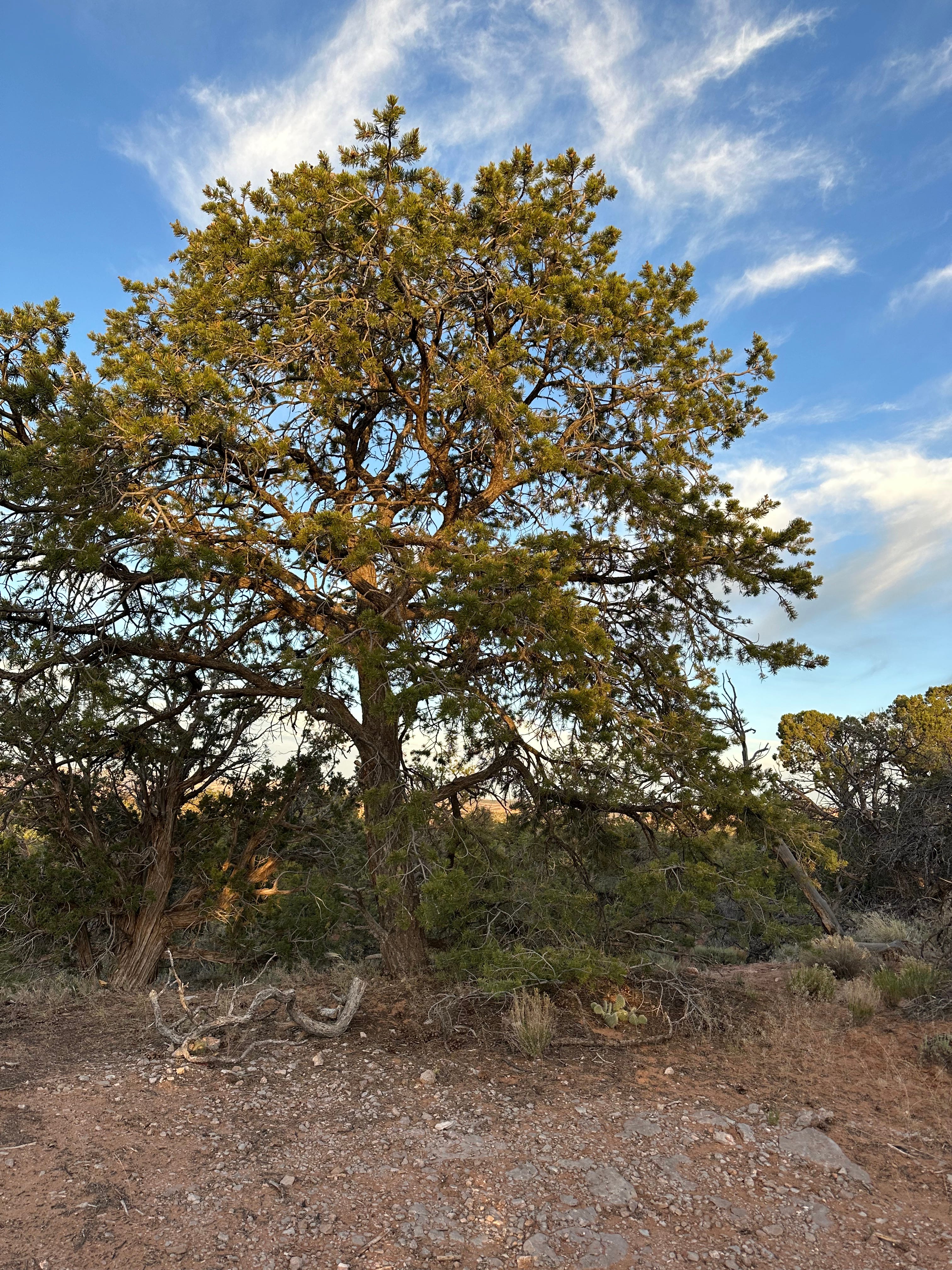
Except for the pinyon pine. She’s equally happy to live in the same harsh environment, as long as 300 to 500 years, some up to 800. The two grow together, side by side, forming pinyon-juniper woodlands.
Beyond the trees, the red rocks of the canyon are another constant in this land we keep returning to, in this spot we first visited over thirty years ago. They have stood here for close to 190 million years. They are Navajo sandstone, formed in the Jurassic period. Yes, they have changed during this time, but so little in a human lifetime, we don’t even notice.
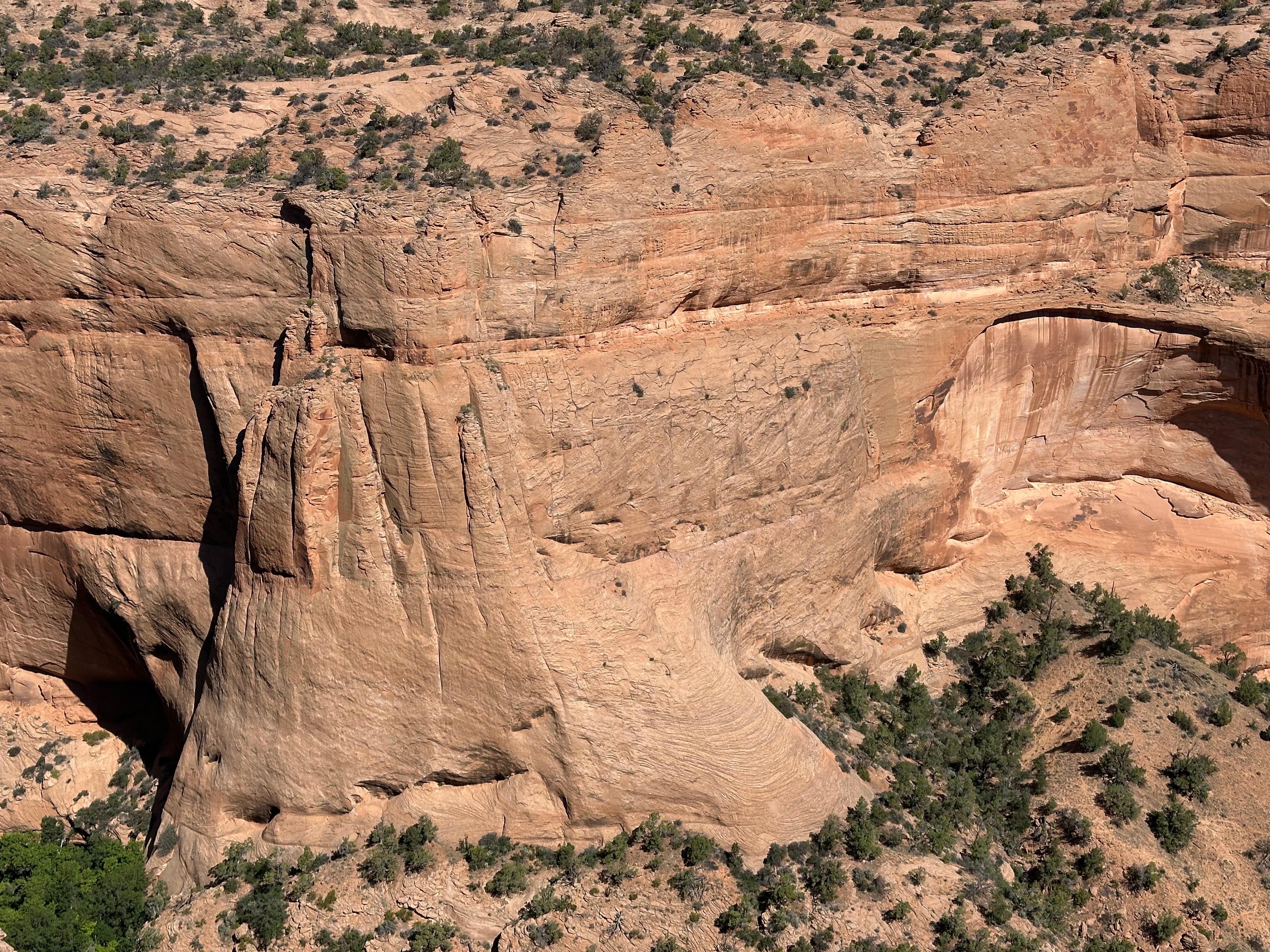
We’ve changed so much since we first visited this place, from young, bright-eyed newlyweds to grey-haired mature adults, yet the landscape remains unchanged. And it will still be here, unchanged, long after we are gone.
Thanks for revisiting the juniper-pinyon forest with me.
Have a great day! Until next time,
Emese
Related post:

Subscribe to Letters from a Wanderer
Read about travel and places through personal travel stories and in-depth narratives at the intersections of nature and wildlife, history and mythology, art and culture. By a wanderer and travel writer published in Lonely Planet, Matador Network, and other travel-related online publications.
Or, support my work with a one-time donation. Thank you! :)
Wonderful post, Emese! I feel a similar kindred spirit sensation when revisiting certain places that are home to certain trees... For example, the oaks on the way down from the bus stop to the village at home, a welcome respite on hot summer days as you're carrying your 8-10 kilogram backpack down (or up) the mountain... Unfortunately, they're beginning to cut those oaks out for no reason at all, I really pray they will leave some of them!!!
Another tree I know very well is the ash tree by our house, as well as the two cherry trees in the yard. Trees make a home!
The trees are beautiful Emese, and love that you know them so well.