

Chasing Clouds
Virga, Rain, or Duststorm

When you live in the Valley of the Sun, where the sun shines 300 days a year, you appreciate clouds. You enjoy clouds. Sometimes you even go chasing clouds.
You hope that those clouds bring rain. But sometimes, they only bring virga, and at their worst, they bring dust storms.
Hello everyone,
This is a free email newsletter about travel and places, where you’ll find personal travel stories and in-depth narratives at the intersections of nature and wildlife, history and mythology, art and culture, told by a published travel writer. To have it land in your inbox, sign up here:
The past few days we’ve been cloud chasers. Instead of traveling far, we’ve been road tripping through Colorado earlier in the season, and now, we’re back to rediscovering our own “neighborhood,” our own state. And, because it is monsoon season, and for the first time in a few years, it actually looks like a real monsoon season, we have been cloud chasing, looking for rain.
Cloud chasing in the Southwest doesn’t always lead to rain, though.
Last month, we camped under heavy clouds, but those clouds only shed virga, rain that doesn’t reach the ground. Virga is common in the Southwest, especially in the early summer, when it’s too hot and dry, and water falling from the clouds evaporates before reaching the earth. Still, plants adapted to this environment absorb water from the clouds, from the vapors of virga. Pretty amazing, I think.
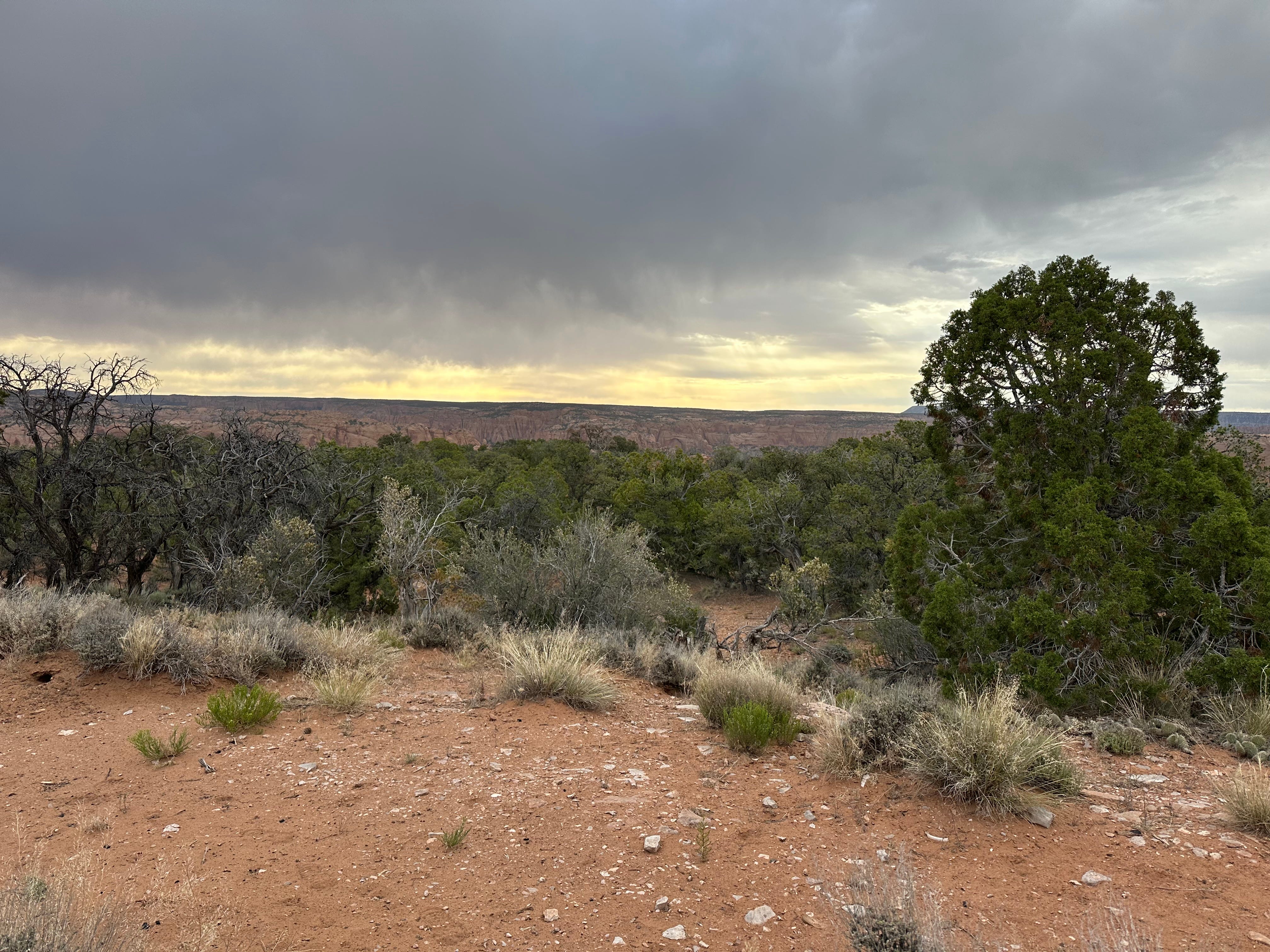
Sometimes, dark clouds in the desert bring dust storms, even haboobs. Dust storms and their extreme variations, haboobs, are caused by strong winds (often, but unfortunately not always) precursors of thunderstorms, lifting dust into the air.
And sometimes, when we are lucky, the clouds do bring rain, either violent, heavy thunderstorms called “male rain” by the Diné (Navajo), or their gentle, steady equivalent, the “female rain.”
During the last few days, we have been lucky. We’ve found clouds and even rain under them, too.
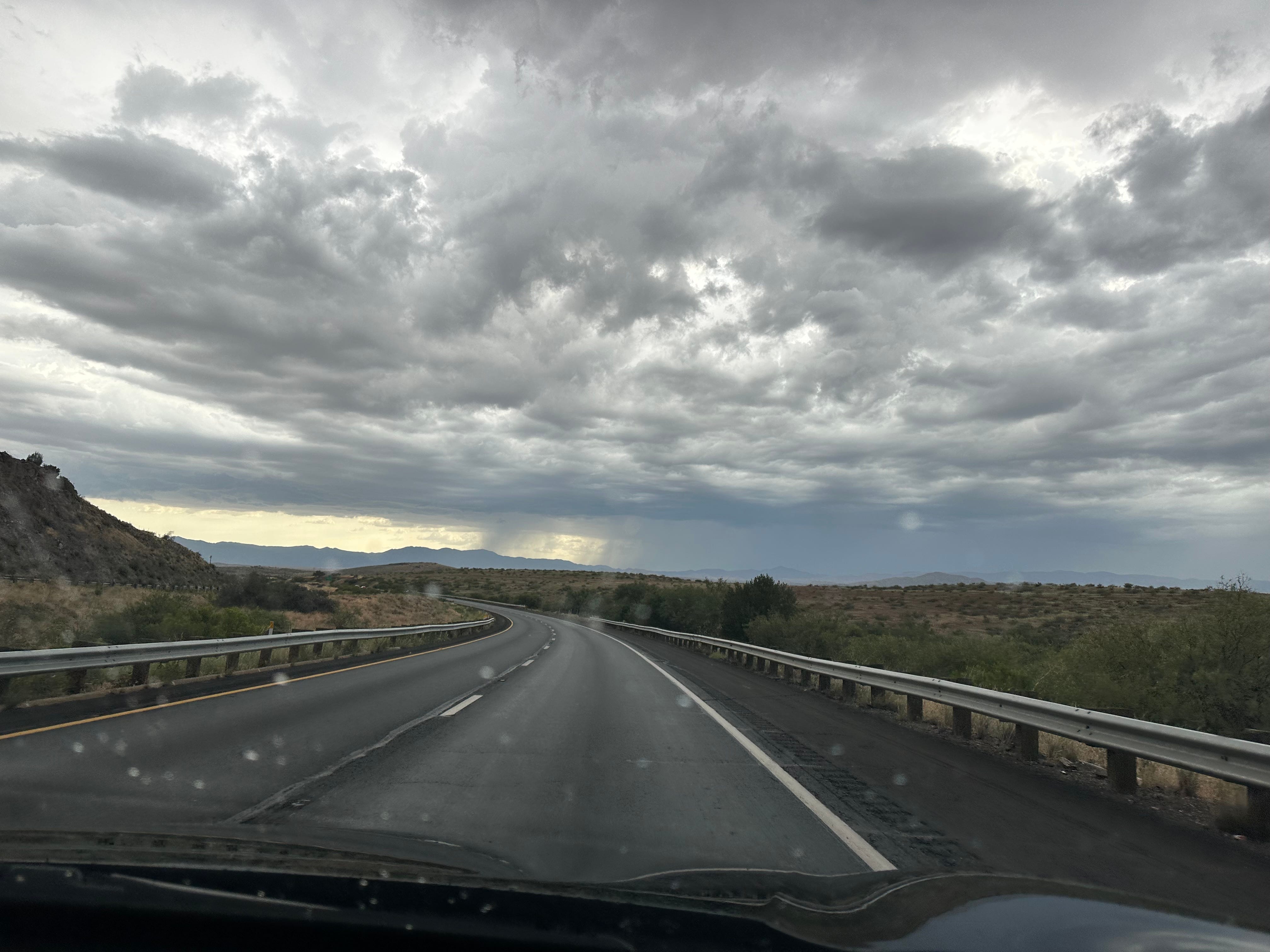
Our best bet for finding rain clouds that actually bring rain is always on the Mogollon Rim. We planned on camping there, but after the heavy rain and the promise of more “male rain” overnight, with strong winds, we drove home for the night. We’ve camped in wind and rain before, and when we were so close to home, we didn’t want to repeat the experience. We might be rain chasers, but we aren’t keen on suffering through losing our tent from above our heads.
However, we enjoyed the rain itself when we stopped at a campground and got out of the car for a walk along a wet trail.


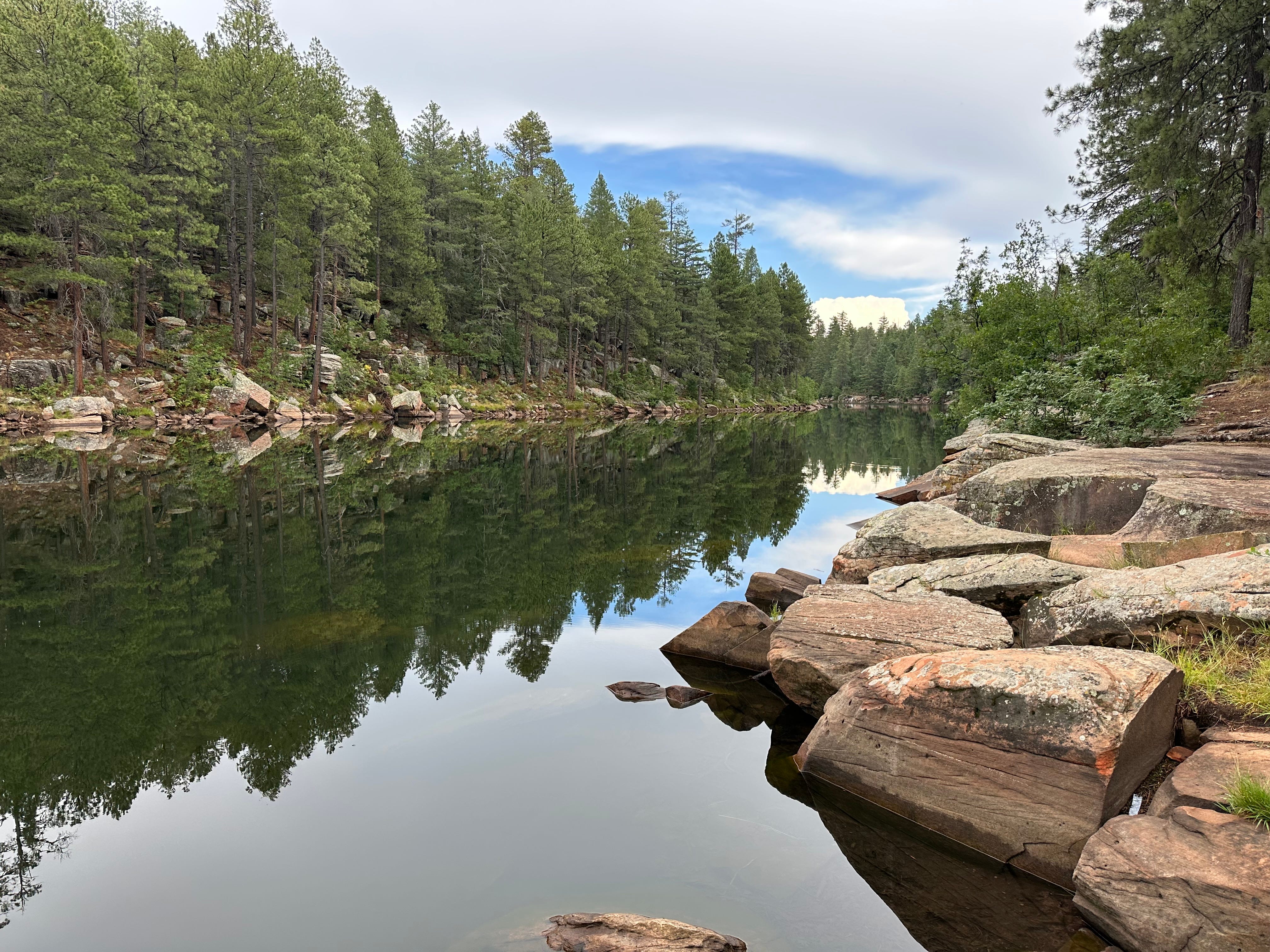
During the quiet between two storms, we hiked one of our favorite trails around Woods Canyon Lake. The lake was quiet, with no boats after the heavy storm, giving us the impression that we were alone in the area.
Unexpected, almost forgotten smells and colors enveloped us. Besides the strong scent of pine, the smell of wet soil, wood, leaves, and plants we didn’t even recognize brought a sense of quiet joy and calm. Colors were sharper, the greens deeper, the yellows, reds, and purples of the flowers brighter, as the rain washed off the dust. Raindrops still sat on the leaves, clear and bright.


On a cloudy day, especially if clouds bring long-awaited rain, people are more cheerful, more talkative, too.
We chatted about the rain, about the potential for a later storm, with one of the staff members in the park. At first, he just warned us not to hike too far, because they had a yellow alert, expecting more rain and heavy winds later in the day. We shared our common appreciation for this monsoon season, mentioning how much our environment needed the rain.
Eventually, the conversation turned to the eagles nesting along the shores of the lake, when we told him we walked the whole trail a few days earlier.
“Do they still have the trail closure up near the nest?” he asked us.
“Yes, they do,” Jeff answered. “But we can still see the nest from afar; we’ve seen the family,” he added.
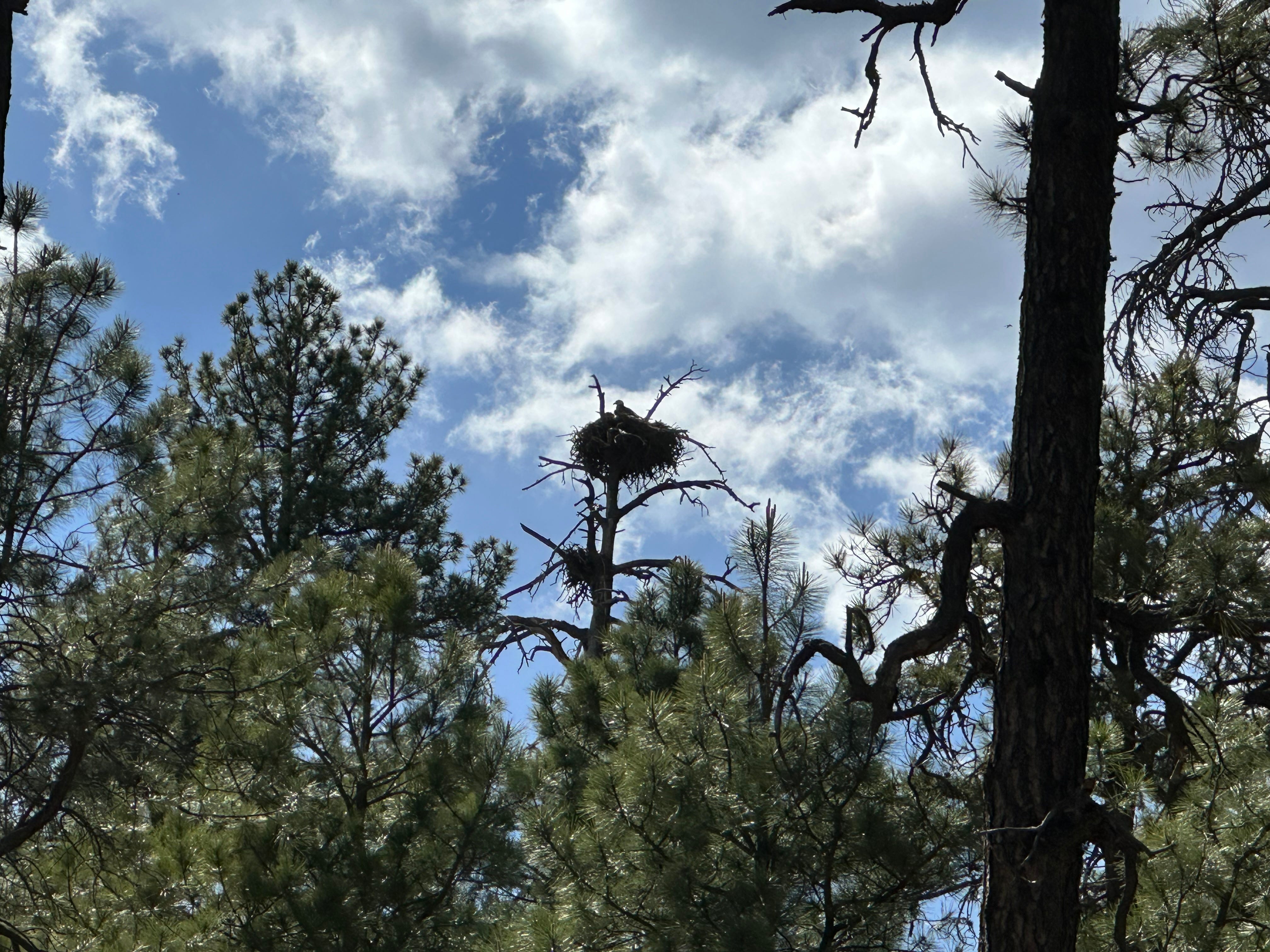
“They won’t have it for long now; the babies are almost ready to fly off. And once they leave, the parents leave, too,” he told us.
“Really? So, they leave the nest empty?” I asked.
“Yes. Sometimes they return to the same nest for another season, but they usually don’t. The couple who works with them here, they had them chipped, and we saw their signal first in California, then later at the Grand Canyon.”
They fly pretty long distances.
I can not be sure it was one of the young eagles, but a few days ago when we hiked the same trail, one flew so close above my head, I heard its wings flap and felt the wind from it. When I looked up, I saw a smaller one, with its coloring brighter than what we usually see. Hearing that they were getting ready to leave the nest reinforced my conviction that it was indeed one of the eaglets. We’ve been watching this eagle family from afar for weeks, if not months, since before they had the closure, which we learned was set up soon after the family moved in and the chicks were born.
We walked on, aware of the imminent storm coming, and understanding that we would stay relatively close to the car. So, we only hiked a short part of the trail, but the one with the densest vegetation.
However, instead of the storm we expected, we had pleasant weather and a quiet time since there were no boats on the lake after the first storm and while waiting for the next.
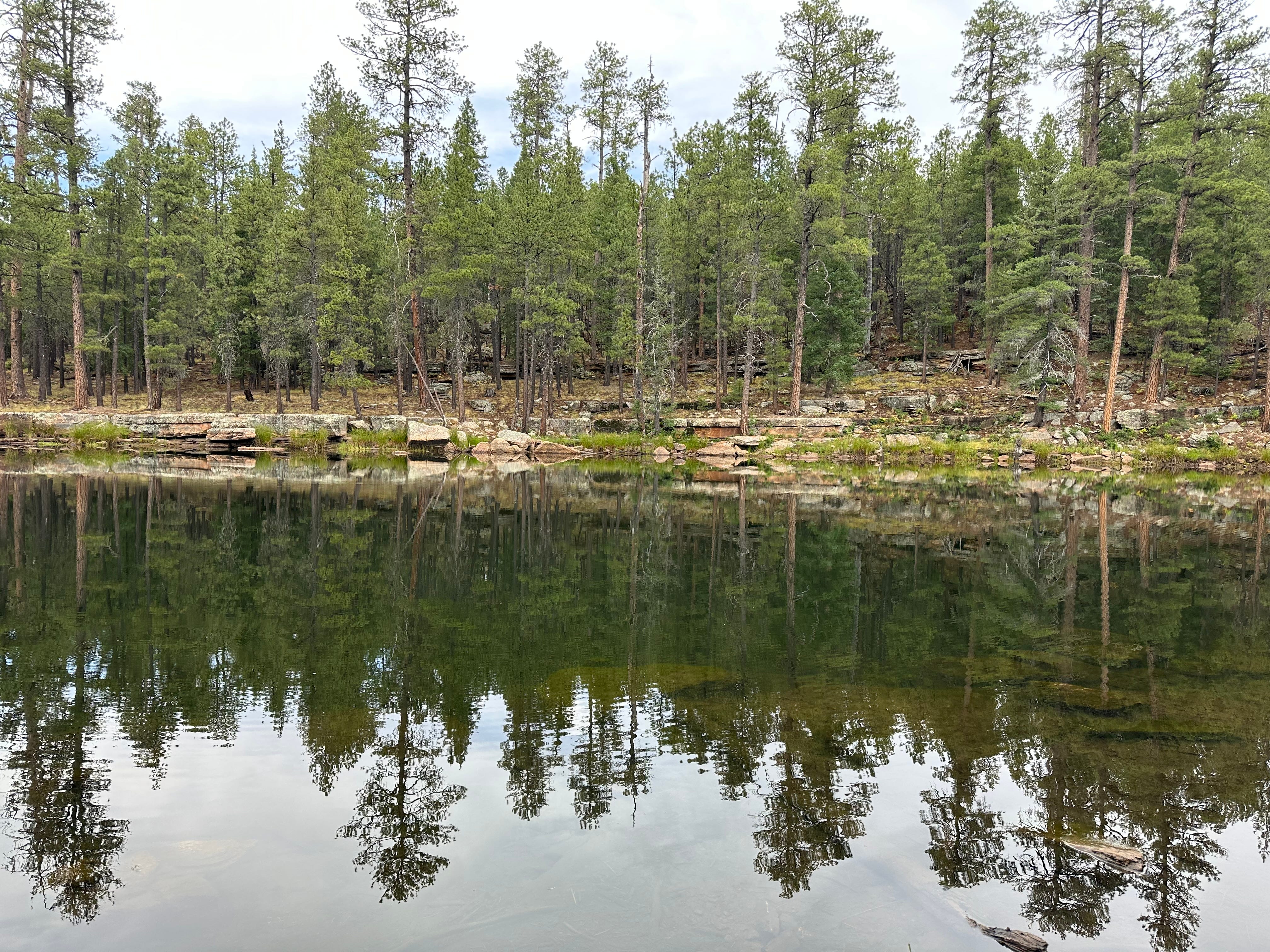
The smells of the wet forest, and later, the flower-filled meadow, enveloped us as we walked. Although the weather was perfect, we noticed some heavy rain clouds heading our way in the distance as we walked back towards our car.
The next day, we set off in search of rain clouds again, this time driving towards the Rim from the opposite direction.
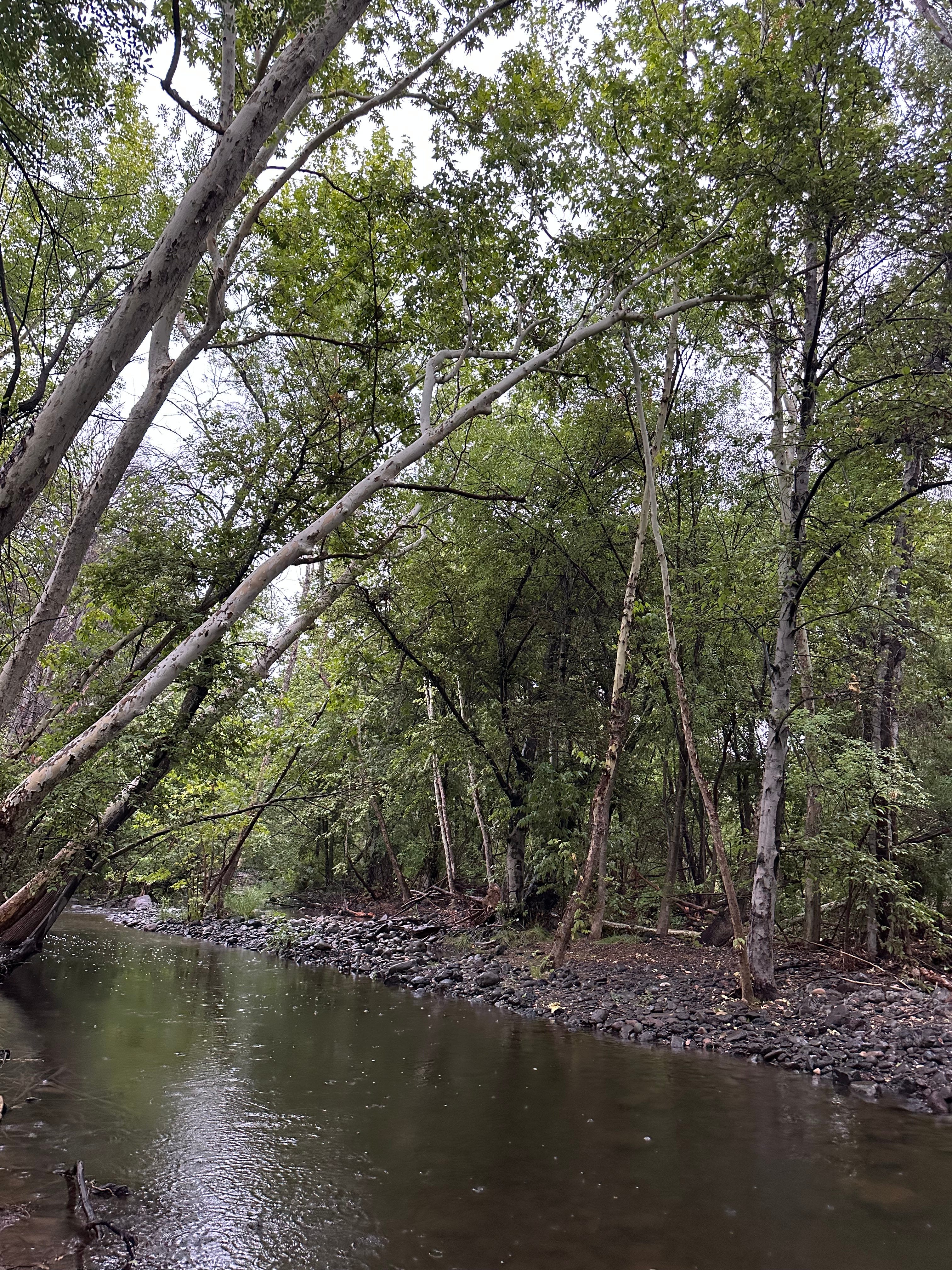
It didn’t take long before the rain clouds caught up with us, and we were driving in a rainstorm. Since we were looking for rain, we found it. And while in search of it, we also found a new campsite near a creek, surrounded by large Arizona sycamore and other deciduous trees.
On the way back, we drove through another pocket of rain.
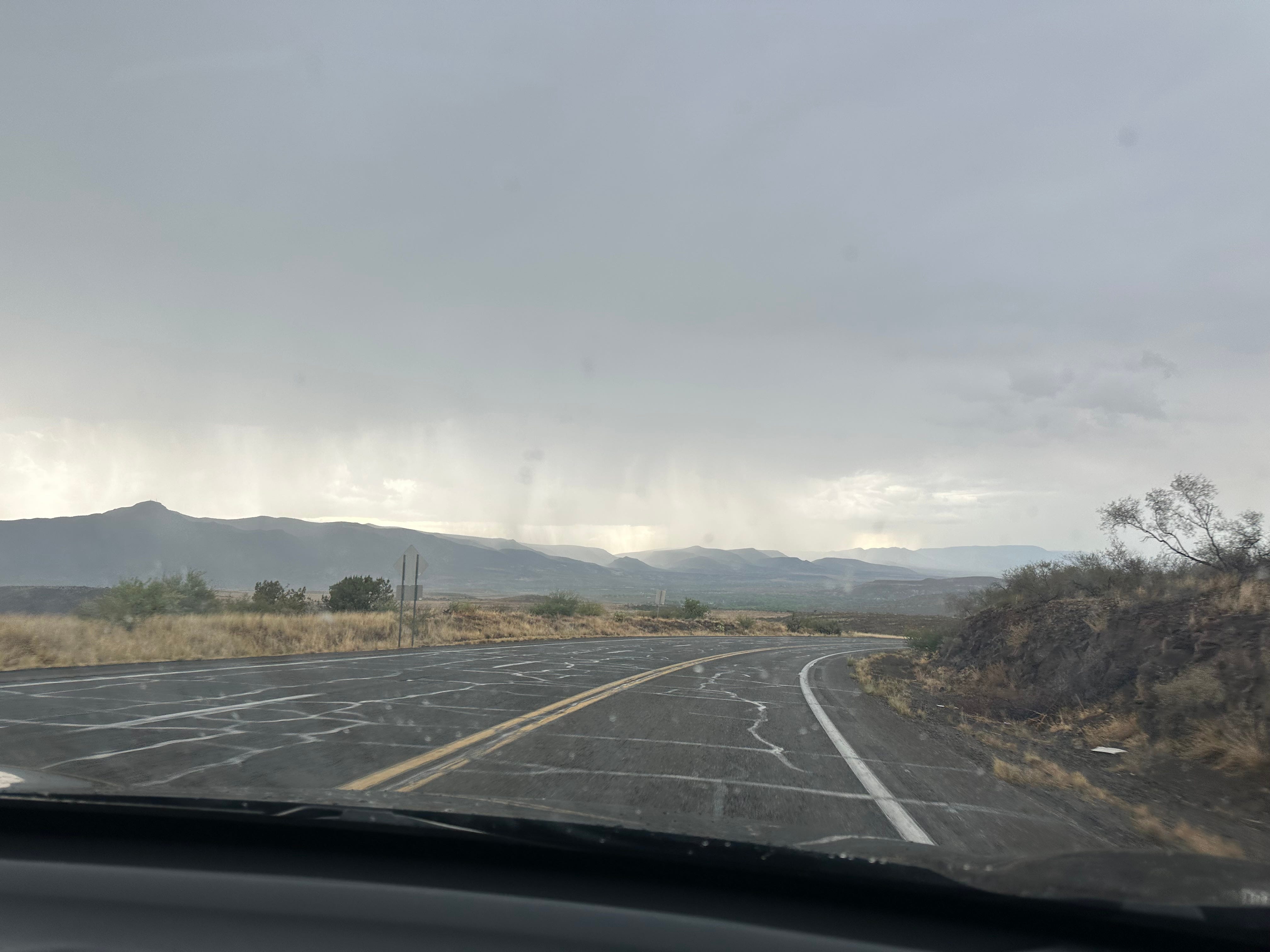
Back in town, it looked like a dust storm from the opposite direction came in at the same time we did. We were almost home when the red alert came on our phones.
As soon as we got in the garage and closed the door, the house shook from the heavy wind, followed by the dust storm they warned about. Eventually, it was followed by heavy rain, “male rain,” accompanied by strong winds, thunder, and lightning, water pelting the side of our house. Later, as the storm subsided, the rain didn’t stop. Instead, it turned into the “female rain,” the quiet, slow rain soaking the ground.
Monsoon season is here. And this year, it is bringing rain, besides the dust storms. The desert is happy; the plants and animals of the low and high desert are happy; and we, people who live here, are also happier, feel lighter, since hope is returning to our lives. We love this rain-bringing weather, but is it enough?
It’s afternoon as I’m writing this, and clouds are gathering near the Rim again. We won’t drive up again, but it looks like those clouds will make their way down into the low desert. We enjoy these clouds, even if they don’t bring rain every time. At least it’s a change from the constant sunshine.
Wishing you rain where you need it and beautiful moments in nature!
Until next time,
Emese
Subscribe to Letters from a Wanderer
Read about travel and places through personal travel stories and in-depth narratives at the intersections of nature and wildlife, history and mythology, art and culture. By a wanderer and travel writer published in Lonely Planet, Matador Network, and other travel-related online publications.
Support my work with a one-time donation. Thank you! :)
Love the moody photos.
beautiful narrative, and great photos